
Maintaining comfortable temperatures inside a large commercial building is a massive engineering feat. Unlike a residential home that relies on a single outdoor condenser and an indoor air handler, commercial facilities must manage thermal loads across thousands of square feet, multiple floors, and varying density zones. Understanding how large-scale climate control actually works requires looking at the interconnected mechanical systems, fluid dynamics, and automated controls that keep expansive spaces safe and comfortable year-round.
The Dynamics of Thermal Load and Heat Transfer
At its core, large-scale climate control operates on the fundamental principles of thermodynamics: heat naturally flows from warm areas to cool areas, and cooling is simply the process of removing heat. In a commercial facility, heat sources extend far beyond the outdoor air temperature.
Internal heat loads generated by computer servers, machinery, overhead lighting, and hundreds of daily occupants contribute significantly to internal temperatures. Solar radiation beaming through massive glass facades can also cause rapid indoor temperature spikes.
To counter these thermal loads, commercial systems move heat out of the building using specialized refrigerants or chilled water loops. High-capacity compressors pressurize refrigerant gas, elevating its temperature before passing it through condenser coils to release absorbed heat to the outdoors. When these high-load components undergo mechanical strain from continuous operation, timely commercial ac repair helps restore proper pressure ratios and fluid flow before system efficiency degrades.
Centralized Plant Equipment: Chillers and Rooftop Units
Large facilities typically rely on one of two primary architectural configurations for central cooling: packaged rooftop units (RTUs) or centralized chiller plants.
Packaged RTUs are self-contained systems mounted directly on the roof of a building. They house the compressor, evaporator coils, condenser, and air handler within a single housing. Ductwork extends directly from the roof down into the building envelope to distribute conditioned air. These units are modular and ideal for medium-sized retail centers, warehouses, and single-story commercial properties.
For multi-story towers, hospitals, and high-rise structures, centralized chiller plants offer a far more efficient solution. Chillers cool water down to roughly 40 to 45 degrees Fahrenheit, which is then pumped through a network of insulated pipes to air handling units (AHUs) located on individual floors. The chilled water absorbs heat from the indoor air as it passes over the AHU coils, and the warmed water returns to the central chiller to repeat the process. Water-cooled systems often route this excess heat to outdoor cooling towers, where evaporation carries thermal energy safely into the open air.
Air Distribution, VAV Boxes, and Zoning
Generating cold air or water is only half the battle; distributing it effectively requires sophisticated airflow management. Commercial buildings are divided into distinct operational zones because a sunlit perimeter office requires significantly more cooling than an interior conference room.
Air handlers push large volumes of conditioned air through main supply ducts toward Variable Air Volume (VAV) terminal units. A VAV box acts as an automated damper for a specific room or zone. Controlled by internal actuators, the damper opens or closes to regulate how much cold air enters the space based on local thermostat readings. If an airflow restriction or damper failure occurs within this complex network, professional commercial ac repair ensures that actuators and fan motors operate within design parameters to balance static pressure across all zones.
Ventilation and Indoor Air Quality Standards
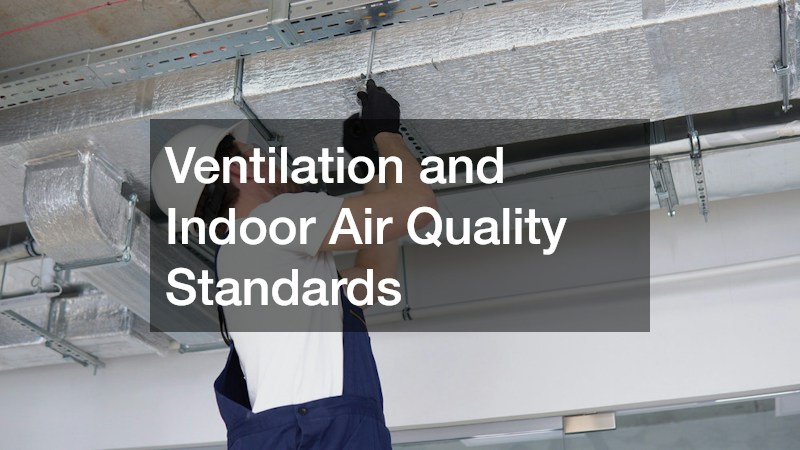
Commercial climate control is not just about temperature; it plays a critical role in indoor air quality and ventilation. Modern building codes require a continuous injection of fresh outdoor air to dilute carbon monoxide, moisture, organic compounds, and airborne contaminants. Proper humidity regulation prevents moisture accumulation that could otherwise damage structural elements or foster mold growth.
Dedicated Outdoor Air Systems (DOAS) pull in raw outdoor air, pre-condition it by removing moisture and regulating its temperature, and deliver it to the main ventilation stream. Energy Recovery Ventilators (ERVs) are frequently integrated into these setups to capture thermal energy from exhaust air before venting it outside. By transferring heat and moisture between incoming and outgoing air streams, ERVs significantly reduce the workload on primary cooling coils.
Automated Building Management Systems
The brain behind any modern large-scale climate control setup is the Building Management System (BMS). A BMS utilizes a network of direct digital controllers, temperature sensors, humidity gauges, and airflow meters to monitor equipment status in real time.
Facilities engineers use the BMS to set operating schedules, adjust supply air setpoints, and identify mechanical anomalies before occupants ever notice a temperature shift. Intelligent algorithms can even optimize startup routines based on weather forecasts and current occupancy trends. When a sensor reports erratic voltage or a compressor draws excessive current, the control system logs an alert. Addressing these early diagnostic warnings through routine commercial ac repair prevents minor sensor drifting or electrical wear from expanding into widespread equipment shutdowns during peak summer heat.
Preserving Large-Scale System Efficiency
Large-scale climate control relies on a delicate equilibrium between mechanical power, fluid dynamics, and electronic automation. When all components—from central chillers and rooftop units to VAV dampers and central control boards—work in harmony, large commercial spaces remain safe, productive, and energy-efficient. Investing in routine diagnostic audits and responding quickly to early signs of component wear protects these critical infrastructure investments for the long haul.
